
Why a Roof Hail Damage Inspection Can Save You Thousands
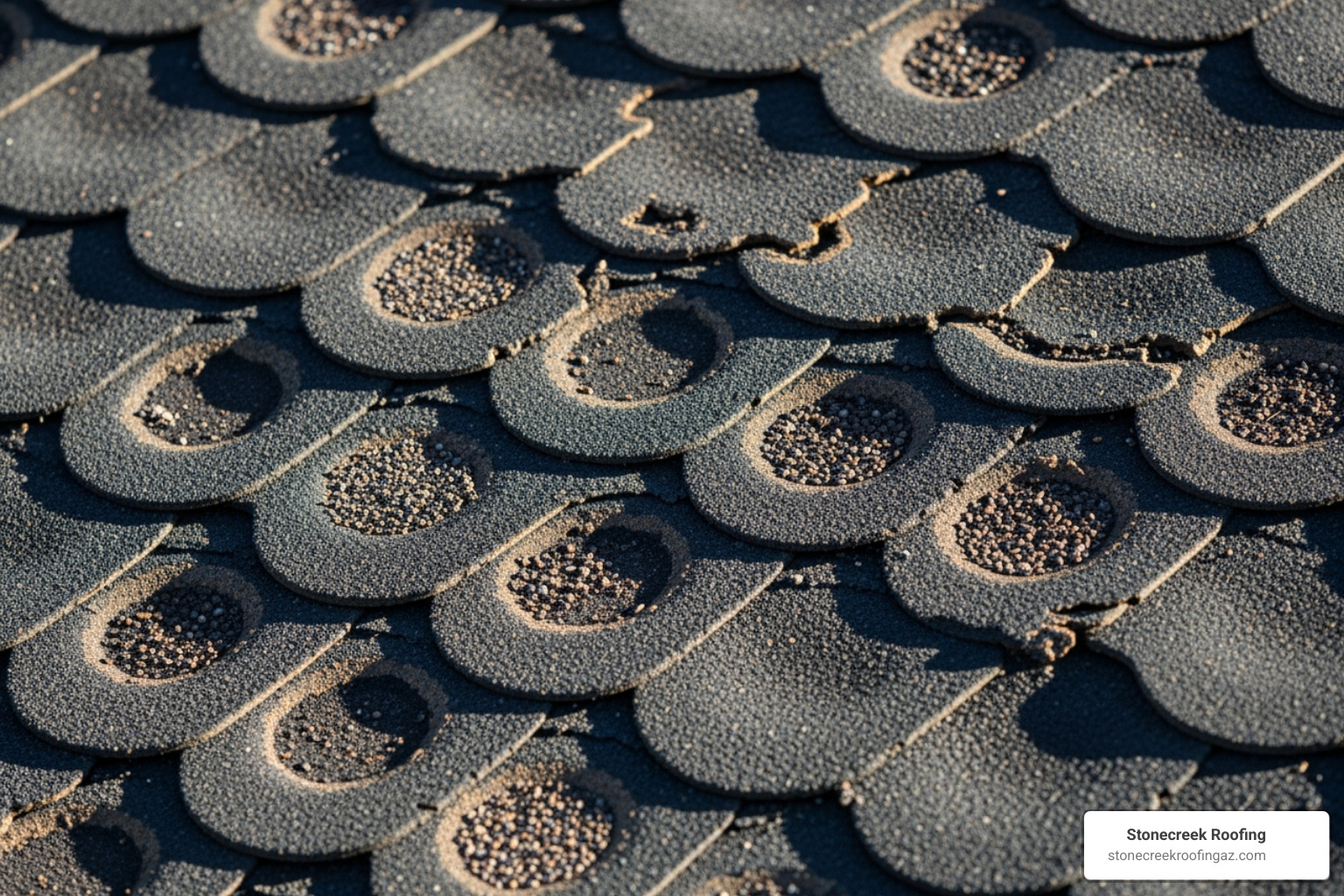
A roof hail damage inspection is essential after any severe storm to identify hidden damage that could lead to leaks, mold, and costly structural issues. Here’s what you need to know:
Quick Answer: How to Inspect Your Roof for Hail Damage
- Check from the ground first – Look for dented gutters, damaged AC units, and chipped siding
- Schedule a professional inspection within days of the storm
- Look for specific signs – Granule loss on shingles, dents in metal, cracked tiles
- Document everything with photos and notes for insurance claims
- Act quickly – Most insurance claims must be filed within 1-2 years
Hailstorms are more common—and more damaging—than most homeowners realize. In 2022 alone, over 4,400 severe hail reports resulted in billions of dollars in property damage across the United States. For every $100 of homeowner premiums collected by insurance companies, $30 goes to paying for wind and hail damage.
The problem? Hail damage isn’t always obvious from the ground.
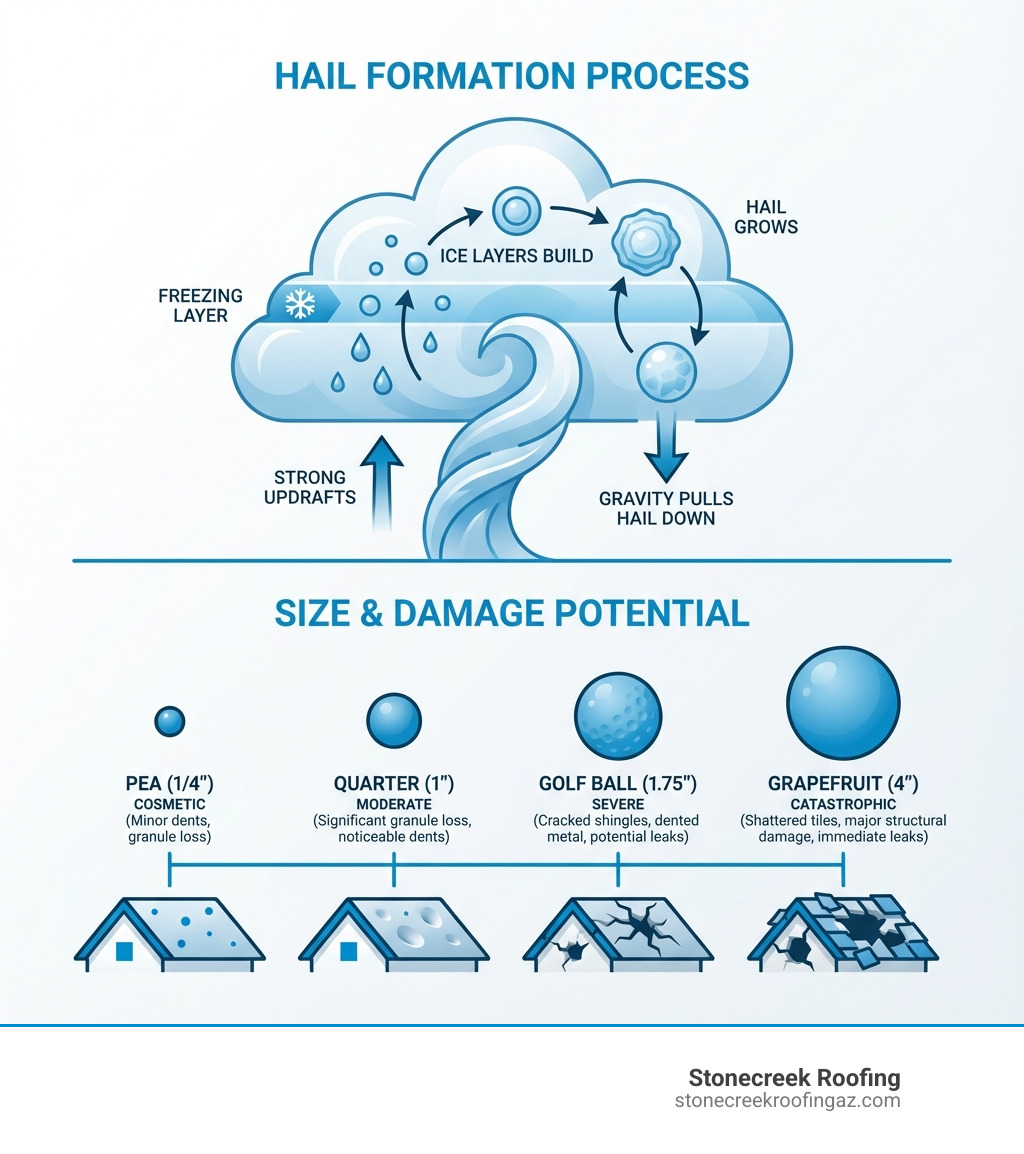
A single hailstorm can drop stones ranging from pea-sized (quarter inch) to softball-sized (4+ inches). While the largest hailstone on record in North America fell in Aurora, Nebraska, even modest one-inch hail can cause significant roof damage—especially to common asphalt shingles.
Hail forms when powerful updrafts in thunderstorms carry raindrops into freezing atmospheric layers. These frozen droplets collide with supercooled water, building layer upon layer of ice until they’re too heavy to stay aloft. The stronger the updraft, the larger the hailstone grows before gravity pulls it down.
Why this matters to you: Hidden hail damage weakens your roof’s integrity over time. What looks like minor cosmetic issues today can lead to water leaks, mold growth, and premature roof failure months or years later. Catching damage early protects your home and strengthens your insurance claim.
This guide will walk you through a systematic inspection process—from safe ground-level checks to understanding what damage looks like on different roofing materials. You’ll learn how to document damage for insurance, when to call a professional, and how to avoid common mistakes that could cost you thousands.
Step 1: Inspecting for Hail Damage from the Ground
Before we even think about climbing onto the roof, a crucial first step in any roof hail damage inspection is to perform a thorough ground-level assessment. Hail doesn’t just hit your roof; it impacts everything exposed to the sky. This “collateral damage” can be a strong indicator that your roof has also sustained damage, even if it’s not immediately visible.
We recommend walking around your entire home, looking for signs of impact on any exterior surfaces. Think of it as detective work – every dent, chip, or mark tells a story.
Here’s what to look for:
When to Schedule a Professional Roof Hail Damage Inspection
After a hailstorm, time is of the essence. We strongly recommend scheduling a professional roof hail damage inspection within days of the storm. Why the urgency?
Firstly, prompt action can prevent further damage. A compromised roof, even if it’s just a few bruised shingles, can quickly escalate to leaks if another storm hits or if the damage is left exposed to the Arizona sun. Secondly, acting quickly makes it easier to link the damage directly to a specific storm event, which can simplify the insurance claims process. Waiting too long can complicate matters, especially if another weather event occurs in the interim.
Our team at Stonecreek Roofing offers prompt and thorough inspections, helping you understand the scope of any potential damage. For a comprehensive overview of immediate steps, check out our Roof Storm Damage Checklist: What to Do After a Storm.
What to Look For on Your Home’s Exterior
Here’s a detailed list of tell-tale signs of hail damage on your home’s exterior that you can spot from the ground:
- Dented Gutters and Downspouts: These are often the first indicators. Look for circular or irregular indentations on metal gutters, gutter screens, and downspouts. Even small hailstones can leave noticeable marks.
- Dented A/C Units: The fins on your outdoor air conditioning unit are made of soft metal and are very susceptible to hail impacts. Check for dents or flattened fins.
- Chipped Siding: Vinyl or aluminum siding can crack, chip, or show impact marks from hail. Look closely, especially on the sides of your home that faced the storm.
- Damaged Window Screens: Hail can tear or puncture window screens.
- Splatter Marks on Fences or Walls: Hail can knock off oxidation or dirt from metal surfaces (like flashing or vents) or dislodge paint from wood. These “spatter marks” aren’t damage themselves, but they are strong evidence that hail has occurred.
- Dented Metal Fascia or Flashing: Any exposed metal, such as around windows, doors, or garage frames, can show dimpling or dents.
- Chipped Paint on Decks or Painted Wood Surfaces: Hail impact can chip away paint, especially on horizontal surfaces like decks, railings, or window sills.
- Damaged Mailboxes, Light Fixtures, or Outdoor Furniture: Don’t forget to check other items around your property that were exposed to the storm. Dents or breaks on these can confirm hail activity.
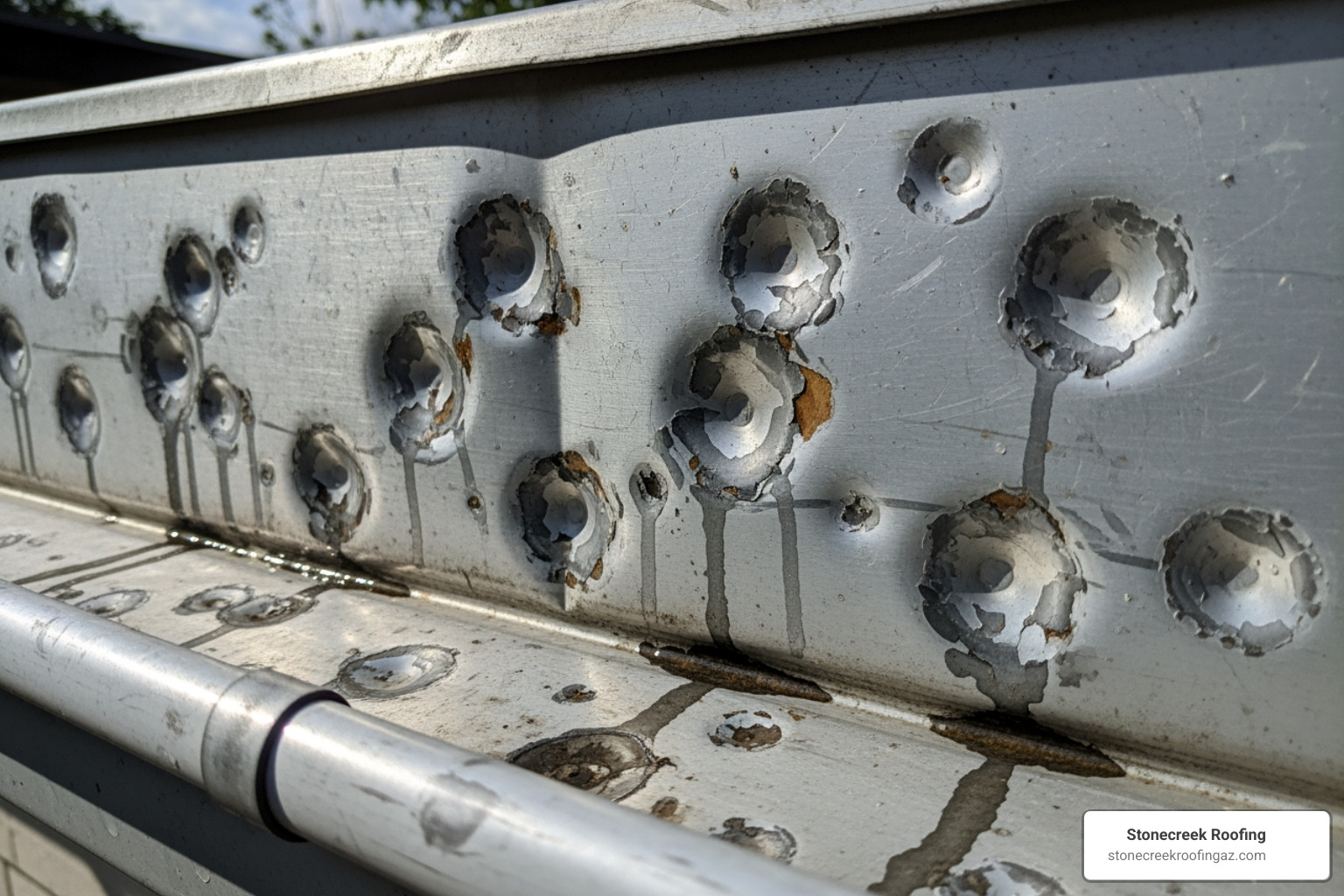
If you spot any of these signs, it’s a good indication that your roof may also have suffered damage, warranting a professional roof hail damage inspection.
Step 2: The On-Roof Inspection (Safety First!)
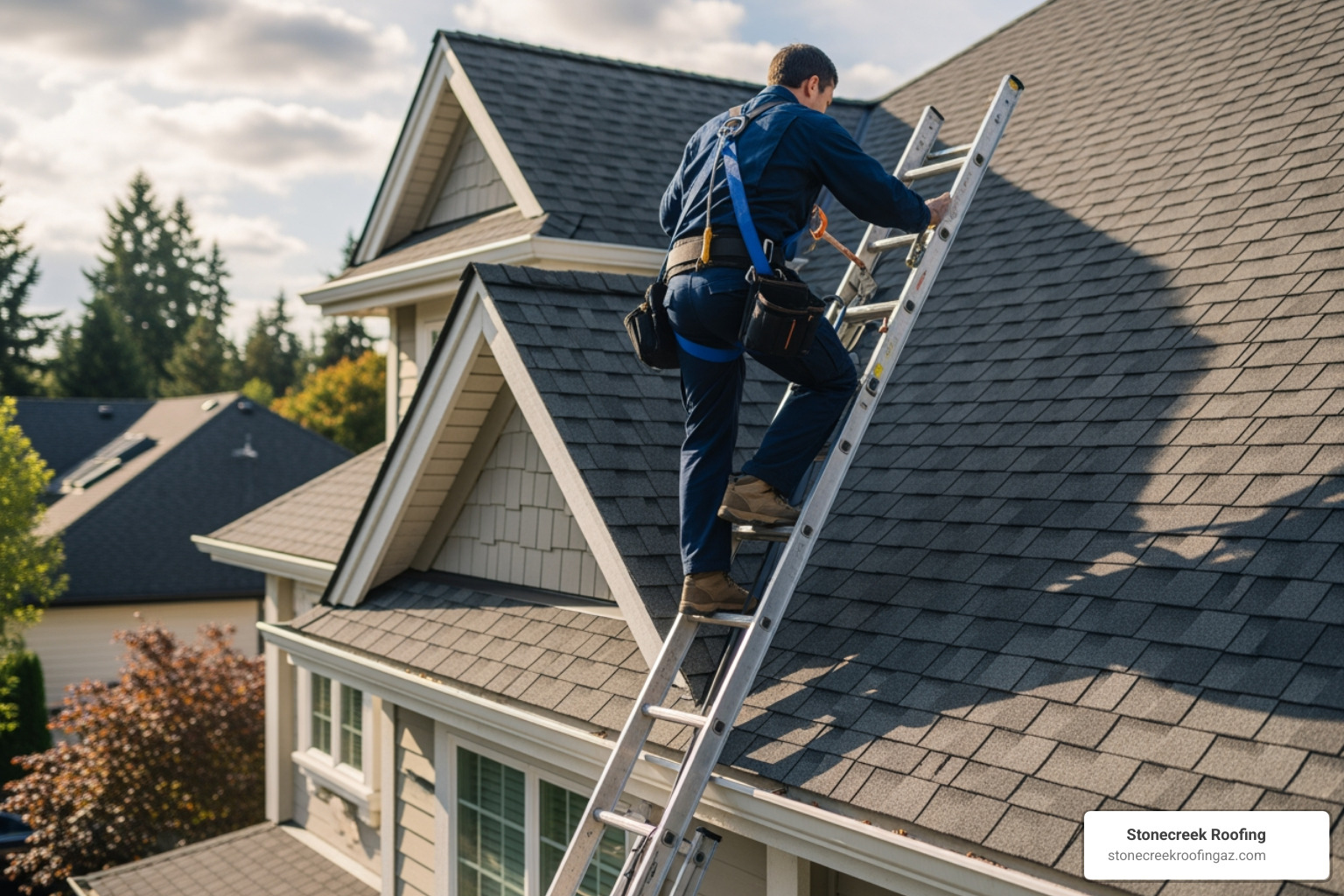
While ground-level checks are important, a definitive roof hail damage inspection requires getting on the roof itself. However, safety is paramount. We cannot stress this enough: climbing on a roof can be dangerous, especially if it’s wet, steep, or already compromised by storm damage. If you’re uncomfortable or inexperienced, please leave this step to the professionals. Our trained inspectors have the right equipment and expertise to perform this task safely.
If you do decide to conduct a brief, cautious inspection yourself (from a ladder, ideally, rather than walking the entire roof), always prioritize safety:
- Ladder Safety: Ensure your ladder is sturdy, properly secured, and extends at least three feet above the roofline. Have someone steady the base.
- Appropriate Footwear: Wear soft-soled shoes or roofing boots for better grip and to avoid further damaging your shingles.
- Work with a Partner: Never inspect a roof alone. A partner can help with ladder stability, pass tools, and call for help if needed.
- Avoid Steep Pitches: Do not attempt to walk on very steep roofs.
- Be Aware of Functional vs. Cosmetic Damage: As you inspect, you’ll be looking for both functional damage (which affects the roof’s ability to shed water or its lifespan) and cosmetic damage (which affects appearance). Distinguishing between the two can be complex, but it’s crucial for insurance claims. For a detailed technical guide, you can learn about hail damage assessment from the experts. That even seemingly minor damage can reduce your roof’s lifespan significantly.
What Tools Are Needed for a Roof Hail Damage Inspection?
A professional roof hail damage inspection requires specific tools to ensure accuracy and thorough documentation:
- Chalk: Essential for circling and marking individual hail hits on shingles. This helps in counting and documenting damage for insurance adjusters.
- Camera or Smartphone: For taking clear, high-resolution photos and videos of all identified damage.
- Binoculars: Useful for a preliminary inspection from the ground or a ladder, allowing you to spot potential issues on hard-to-reach areas without unnecessary risk.
- Tape Measure: For documenting the size of hail hits or damaged areas, and for marking out “test squares” (more on this later).
- Ladder: A sturdy, extendable ladder is crucial for safe roof access.
- Safety Harness and Ropes: For professional inspectors on steeper roofs, these are non-negotiable safety equipment.
- Gloves: To protect hands from rough surfaces and potential hazards.
At Stonecreek Roofing, our inspectors are equipped with all the necessary tools and expertise to conduct a comprehensive and safe inspection. You can learn More about our inspection process on our website.
Signs of Hail Damage on Different Roofing Materials
Hail interacts differently with various roofing materials. What might look like a minor scuff on one type of roof could be a serious structural compromise on another. Here’s a comparison of what to look for:
| Roofing Material | Common Signs of Hail Damage |
|---|---|
| Asphalt Shingles | Granule loss, Bruising, Exposed fiberglass mat, Cracks |
| Metal | Dents, Chipped paint, Rust spots |
| Tile | Cracks, Chipped sections, Shattered tiles |
| Wood Shakes | Splits, Gouges, Impact marks |
Your Next Steps After a Hailstorm
After a storm, a thorough inspection is your first line of defense. Identifying damage early prevents small issues from becoming costly disasters. By following this guide, you can confidently assess your property and take the right steps to protect your home. For a professional, no-obligation inspection in the Phoenix, Tucson, Gilbert, Mesa, Glendale, Scottsdale, Tempe, Chandler, Paradise Valley, Sun City, Surprise, Goodyear, Avondale, Buckeye, Peoria, Green Valley, Summit, Littletown, Casa Adobes, Oro Valley, Payson, Prescott, Flagstaff, and Sedona areas, trust a team with a proven record.
Stonecreek Roofing has earned over 500 5-star reviews, making us a local and trusted choice across Arizona. We’re here to provide the peace of mind you deserve. Schedule your free storm damage inspection today.