
Fascia on a house is the long, horizontal board that runs along the lower edge of the roof, covering the ends of the roof rafters or trusses. It supports the gutter system, blocks moisture and pests from entering the attic, and gives the roofline a finished appearance. Fascia is typically made from wood, aluminum, vinyl, or PVC.
If you have ever looked at the edge of a roof and noticed a clean horizontal board running just behind the gutter, that is the fascia. It is one of the most overlooked components of a home, yet it carries critical structural, protective, and aesthetic responsibilities. In Arizona’s climate, especially, the condition of your fascia can determine how well the rest of your roofing system performs.
In this guide, you will learn what fascia is, what it does, what materials work best in Arizona, and how to spot damage before it becomes expensive.
What Is Fascia on a House?
Fascia is the flat, horizontal board installed along the lower edge of a roof where the rafters or trusses end. It is the board your gutters attach to, and it sits perpendicular to the ground, facing the street.
The word “fascia” comes from Latin, meaning “band” or “strip.” In residential construction, fascia is the finishing trim that closes off the open ends of your roof framing. Without it, you would see the raw ends of every rafter sticking out from your roofline. With it, you get a clean, finished edge that also supports your gutters.
Fascia works hand in hand with the soffit (the underside panel of the roof overhang). Together they form the roof’s transition between the structure and the exterior, sometimes called the “roofline.”
Where Is Fascia Located on a House?
Fascia is located at the lower edge of the roof, running horizontally along the eaves between the roof surface and the soffit. It is the front-facing board behind your gutters.
To locate it on your home:
- Look at where the roof meets the exterior wall
- Find the horizontal board directly behind or beneath the gutter
- The fascia is vertical (perpendicular to the ground), facing outward
- Below the fascia, tucked under the eave, is the soffit
On homes with a gable end, the equivalent board running along the angled roof edge is the bargeboard or rake board, similar to fascia but on the gable rather than the eave.
What Does Fascia Do on a House?
Fascia performs three primary functions: it supports the gutter system, blocks moisture and pests from entering the roof structure, and provides a finished aesthetic edge to the roofline.
Here is each function in detail:
1. Supports the Gutter System
Gutters are heavy. During heavy monsoon rain, gutters can become extremely heavy when filled with water and debris. The fascia must be strong enough to keep them securely attached. The fascia is what holds those gutters in place. Without a structurally sound fascia, gutters sag, pull away from the home, or fall entirely.
2. Blocks Moisture and Pests
Fascia seals off the exposed ends of your roof rafters and trusses. This prevents wind-driven rain, monsoon water, dust, birds, rodents, bats, and insects from entering your attic. In Arizona, where bats and rodents actively look for shelter from extreme heat, this barrier matters more than most homeowners realize.
3. Provides Aesthetic Finishing
Fascia is the visible “face” of your roof edge. A clean, well-painted fascia significantly improves curb appeal and resale value. A peeling, rotted, or sagging fascia drags down the appearance of the entire home.
4. Supports the Lower Edge of the Roof System
The first row of shingles or tiles often rests against or near the fascia. Combined with the drip edge (a metal flashing), the fascia helps direct rainwater into the gutter rather than under the roof.
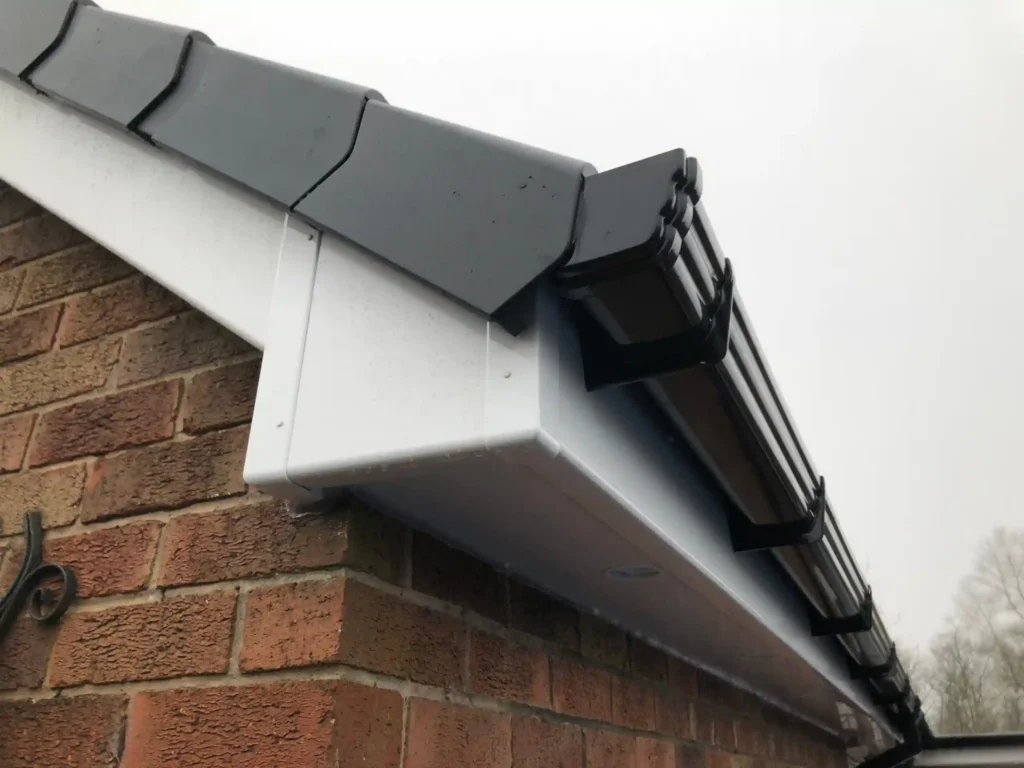
What Is Fascia Made Of?
Fascia is most commonly made from wood, aluminum, vinyl, PVC, or composite materials. In many Arizona homes, the structural fascia board is wood, while the outside may be painted, wrapped with aluminum, or finished with another protective material.
| Material | Lifespan | Maintenance | Best For |
|---|---|---|---|
| Wood (pine, cedar) | 10–20 years | High | Traditional homes |
| Aluminum | 30–40 years | Low | Sun-exposed elevations |
| Vinyl/PVC | 20–40 years | Very low | Budget-conscious |
| Composite | 25–30 years | Low | Wood-look with durability |
| Fiber cement | 30+ years | Medium | Premium builds |
Many Arizona homes use wood fascia boards, often painted or wrapped with aluminum coil stock (called “fascia wrap”) to protect the wood from sun and water damage.
What Is Fascia Wrap, and Do I Need It in Arizona?
Fascia wrap is an aluminum covering installed over a wooden fascia board to protect it from sun and water damage. In Arizona, fascia wrap is one of the most cost-effective upgrades to extend the life of your fascia.
Wood fascia exposed to direct Arizona sun, especially on east and west elevations, can crack, split, and fade faster if the paint or protective coating fails. Once paint fails, water enters the wood grain. Once water enters, rot follows quickly. Aluminum fascia wrap helps reduce direct sun and moisture exposure and often comes with a durable factory-applied finish.
What Is the Difference Between Fascia and Soffit?
Fascia is the vertical board at the edge of the roof; soffit is the horizontal panel tucked beneath the roof overhang. Fascia faces outward toward the street; soffit faces downward toward the ground.
The two work together as a system:
- Fascia = front-facing edge; supports gutters; blocks weather.
- Soffit = underside panel; provides attic ventilation through perforations or vents.
If your attic ventilation comes from the eaves, it flows through the soffit, not the fascia. Both need to be intact for the roof system to breathe and stay dry.
What Causes Fascia Damage in Arizona?
Fascia damage in Arizona is most commonly caused by sun exposure, clogged gutters, monsoon storms, pest infestation, and poor attic ventilation. The combination of intense UV and seasonal moisture is uniquely harsh on wood fascia.
Common causes:
- UV degradation: Phoenix averages over 300 sunny days per year. Paint fails, wood dries, and cracks form.
- Clogged gutters: Standing water in clogged gutters spills back onto the fascia, soaking the wood.
- Monsoon-driven rain: Wind-driven rain pushes water behind gutters and into fascia seams.
- Pest infestation: Termites, carpenter ants, and woodpeckers all attack weakened fascia boards.
- Poor attic ventilation: Trapped moisture from the attic side rots the fascia from the inside out.
What Are the Signs of Fascia Damage?
The most common signs of fascia damage are peeling paint, sagging gutters, soft or crumbling wood, visible cracks, water stains, and pest activity. Catching these early prevents far more expensive structural repairs.
Watch for:
- Peeling, blistering, or flaking paint.
- Gutters are pulling away from the home or sagging.
- Soft, spongy, or visibly rotted wood.
- Dark stains or water marks running down the fascia.
- Visible holes from termites, ants, or woodpeckers.
- Mold or mildew growth on or near the fascia.
If gutter screws no longer hold tight or the gutter has fallen completely, the fascia board behind it may be compromised.
How Long Does Fascia Last in Arizona?
Wood fascia in Arizona typically lasts 10 to 20 years before requiring repair or replacement, while aluminum-wrapped or PVC fascia can last 30 to 40+ years. Lifespan depends on sun exposure, gutter maintenance, and whether the fascia was wrapped.
East- and west-facing fascia take the hardest UV beating in Arizona and often fail first. North- and south-facing fascia generally lasts longer. Homes with regularly cleaned gutters and aluminum fascia wrap can extend service life well past national averages.
How Much Does Fascia Replacement Cost?
Fascia replacement costs vary based on material, roof access, gutter removal, labor, and the amount of hidden damage behind the board. In many Arizona projects, simple fascia repairs cost less than full fascia, soffit, gutter, or roof-edge repairs. Aluminum fascia wrap on existing wood costs less than full board replacement. Stonecreek Roofing provides written, itemized estimates after inspecting the fascia, soffit, gutters, and roof edge.
Fascia cost depends on whether the job is a simple board replacement, fascia wrap installation, gutter removal and reinstallation, or a larger repair involving soffit, roof decking, or rafter-tail damage.
Cost ranges:
- Wood fascia replacement: $6–$12 per linear foot.
- Aluminum fascia wrap: $8–$15 per linear foot.
- PVC or composite replacement: $10–$20 per linear foot.
- Full fascia + soffit replacement: significantly higher.
If gutter removal, decking repair, or roof edge work is required, costs increase. Stonecreek Roofing provides written, itemized estimates with no hidden charges.

When Should Fascia Be Replaced Instead of Repaired?
Fascia may only need repair if the damage is limited to peeling paint, small cracks, or minor surface wear. Replacement may be needed if the board is soft, rotted, pulling away from the roof edge, or no longer securing gutter fasteners. If the damage has spread into the soffit, roof decking, or rafter tails, a larger roof-edge repair may be needed.
Final Takeaway
Fascia protects your roof edge, supports your gutters, and helps keep moisture and pests out of your home. In Arizona, sun, heat, and monsoon rain can wear it down faster, so signs like peeling paint, sagging gutters, stains, or soft wood should not be ignored.
If your fascia looks damaged or you are unsure about its condition, schedule a free inspection with Stonecreek Roofing. Call (602) 324-3400 for Phoenix, (520) 344-9320 for Tucson, or book your inspection online.
FAQs
What is fascia on a house in simple terms?
Fascia is the horizontal board running along the lower edge of your roof. Your gutters attach to it.
Is fascia the same as a soffit?
No. Fascia is the vertical, front-facing board behind the gutter. Soffit is the horizontal panel underneath the roof overhang.
Can I replace the fascia myself?
Minor cosmetic touch-ups, like paint, may be DIY-friendly, but a full replacement requires gutter removal, working at height, and proper sealing. Professional installation is strongly recommended.
How often should I inspect my fascia in Arizona?
Twice a year, before and after monsoon season, the same schedule is recommended for roof inspections.
Does Stonecreek Roofing offer free fascia inspections?
Yes. Free roof inspections include fascia, soffit, and gutter assessment across all Arizona service areas.